Saturday, 14 February 2015

St Valentine's day

A little bit on the origins of Valentine's day this week.

The romantic elements of Valentine's Day appear to have begun in the medieval England and France and the chosen date of the 14th of February is impart due to the changing seasons and belief that birds began pairing up for mating on this date.


 For this was sent on Seynt Valentyne's day
Whan every foul cometh ther to choose his mate.
 
- Geoffrey Chaucer, The Parlement of Foules, lines 309-310


Literature and traditions of the time followed suit and Valentines gradually accrued a catalogue of poems, letters, and tokens of affection exchanged on this day. One of the oldest of these Valentine's day letters was written by Margery Brews to her fiance John Paston in 1477:

Unto my right well-beloved Valentine John Paston, squire, be this bill delivered.

Right reverent and worshipful and my right well-beloved valentine, I recommend me unto you full heartedly, desiring to hear of your welfare, which I beseech Almighty God long for to preserve unto his pleasure and your hearts desire. And if it pleases you to hear of my welfare, I am not in good health of body nor of heart, nor shall I be till I hear from you. For there knows no creature what pain that I endure, And even on the pain of death I would reveal no more. And my lady my mother hath laboured the matter to my father full diligently, but she can no more get than you already know of, for which God knoweth I am full sorry. But if you love me, as I trust verily that you do, you will not leave me therefore. For even if you had not half the livelihood that you have, for to do the greatest labour that any woman alive might, I would not forsake you. And if you command me to keep me true wherever I go, indeed I will do all my might you to love and never anyone else. And if my friends say that I do amiss, they shall not stop me from doing so. My heart me bids evermore to love you truly over all earthly things. And if they be never so angry, I trust it shall be better in time coming. No more to you at this time, but the Holy Trinity have you in keeping. And I beseech you that this bill be not seen by any non earthly creature save only yourself. And this letter was written at Topcroft with full heavy heart.

Be your own Margery Brews.

Of the actual St Valentine, details are a little sketchy (as there are several individuals) but the primary martyr appears to have been martyred in Rome in the 3rd century and he, or the others bearing his name, became associated with the 14th February.

Finishing with something practical (or not) those of you wishing to entrap the object of your desires may wish to go and find a wolf:

 "Soliunus, who tells us much about the nature of things, says that there is a little patch of hair on its tail which is a love-charm: if the wolf is afraid that it will be caught, it tears it off with its teeth of its own accord. The hair has no effect if it is not taken from the wolf while it is still alive"


Notes 
Bestiary Image: Aberdeen University Library MS 24, f. 16v
http://www.abdn.ac.uk/bestiary/translat/16v.hti

Bestiary text:
Bestiary, being an English Version of the Bodleian Libary, Oxford, MS Bodley 764, ed. R. Barber (Woodbridge, Boydell Press: 1992) p. 70

Miniature of Queen Guinevere questioning Lancelot about his love for her:
BL, MS Additional 10293 f. 199


Parlement of Foules:
http://www.bartleby.com/258/58.html

Paston letter:
http://www.bl.uk/learning/timeline/item126579.html


"St. Valentine." The Catholic Encyclopedia. Vol. 15. New York: Robert Appleton Company, 1912
http://www.newadvent.org/cathen/15254a.htm

Saturday, 7 February 2015

Sainthood - St Thecla

St Thecla was a well known saint as early as the second century AD.

Described as a companion of St Paul, she chose a life devoted to virginity and refused to marry. This led her to be twice condemned to execution for her beliefs (she failed to obligingly die twice) yet despite her lack of death, she is often cited as the first female martyr.

In her story, upon being condemned to death (for the second time) in the arena by the Romans, she baptises herself (according Bartlett) by "throwing herself into a tank full of savage seals".

Bartlett does however suggest that these seals may actually have been sharks, but I personally prefer the idea of savage seals.

As well as his unusual baptism, she cross-dresses, preaches as an apostle,  and according to a fifth century version of her life, she finally "dies" by sinking into the ground alive.

On the topic of seals, the Aberdeen bestiary has this to say:

"Other fish produce living offspring from their bodies, like the great whales, dolphins, seals and others of this sort; when they have produced their young and have, perhaps, a premonition that these are ever threatened by some kind of trap or in danger, in order to protect them or to calm with a mother's love the fear of those of tender years, they are said to open their mouths and hold their young, without harming them, in their teeth, and also to take them back into their body, concealed in their womb.

What human affection can equal the sense of duty that we find in fish? For us, kisses suffice. For them, it is not enough to open the innermost parts of their body, to swallow their young then bring them back whole, to give their offspring life once again with their own warmth, to breathe into their young their own breath, and to live as two in one body until either they have carried them off to safety or by interposing their own bodies, have protected their young from the threatened danger.

Which fisherman seeing this, even if he were still able to catch the fish, would not give in to such a display of duty? Who would not marvel and stand amazed that nature has preserved in fish a quality that is not found in men?

Many men, acting out of mistrust, driven by malevolence and hatred, have killed their children; we have read of others, women, who have eaten their own children in times of famine. The mother thus becomes a tomb for her infants. To the spawn of the fish, however, the mother's womb is like a wall; she preserves her harmless brood by turning her innermost parts into a sort of fortress.
"


Notes


Bartlett, R., Why can the Dead do Such Great Things? Saints and Worshippers from the Martyrs to the Reformation (Princeton: Princeton University Press, 2013) p. 25

Catholic Encyclopedia
http://www.newadvent.org/cathen/14564a.htm

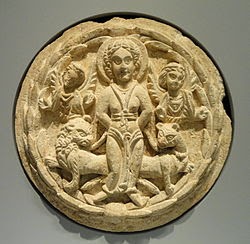
"Roundel with Thecla Surrounded by Beasts and Angels"
https://inpress.lib.uiowa.edu/feminae/DetailsPage.aspx?Feminae_ID=30983

"Sea pig"
MS Kongelige Bibliotek, Gl. kgl. S. 1633 4º, Folio 61r

"Seals", Aberdeen bestiary
http://www.abdn.ac.uk/bestiary/translat/74r.hti

Saturday, 31 January 2015

Language Tools

This post is more for the medievalist rather than the passing history buff but I thought it would be useful to compile useful sites for translating and using medieval documents.

I'll update this periodically if I find any more useful sites, or if any become out of date.

For those of you that expected more than a page of links, here is a nun picking penises from a tree:

- Read more about penis trees 

- and a more academic look 
Latin glossary:
http://ducange.enc.sorbonne.fr/

Latin glossary:
http://comp.uark.edu/~mreynold/recint1.htm

Medieval latin dictionary and conjugator:
http://archives.nd.edu/words.html

Verb conjugator, not very smart though as sometimes it will invent conjugations:
http://www.verbix.com/

How to translate latin verbs into English:
http://www.uvm.edu/~bsaylor/latin/cheatsheet.html

More for classical latin, but useful if you're trying to find alternate beginnings or endings for a word:
http://www.perseus.tufts.edu/hopper/morph?redirect=true&lang=Latin


Latin abbreviation dictionary (Online version of The Record Interpreter)

Latin abbreviation dictionary (online version of Cappelli)

Latin place names


Whole list of useful online palaeographic resources:
http://www.rechtshistorie.nl/en/home/palaeography

Online palaeography course:
http://www.history.ac.uk/research-training/courses/online-palaeography

Another online palaeography course:
http://www.nationalarchives.gov.uk/palaeography/


Middle English dictionary:

Numerous dictionaries including old English and French:
http://www.wikiwords.org/

Dictionary of French equivalents for Latin place names:


Digitised MS images:
http://www.bl.uk/catalogues/illuminatedmanuscripts/welcome.htm

Saturday, 24 January 2015

Cold Snap

The recent cold snap made this entry in Reading Abbey's cartularies all the more poignant:


8th November, 1257

"Grant by Pope Alexander IV to the abbot and convent of Reading...that since they assert that the cold in winter is so sever in their region that they cannot attend divine office bare-headed without danger to health, they may wear appropriate felt caps in the monastery when necessary."


Notes

Kemp, B., ed., Reading Abbey Cartularies, Vol. 31, Camden Fourth Series (London: Offices of the Royal Historical Society, UCL, 1986) p. 138

Image: "TheBaldingOne", Deviant Art
http://www.deviantart.com/art/Roche-Abbey-I-264766923

Saturday, 17 January 2015

Sainthood - St Anthony

Today, the 17th of January, is the feast day of St Anthony. St Anthony is a fairly important saint in my own research (medieval monasticism) as he was one of the founding fathers of the monastic lifestyle.

Alive in Egypt between 251-356 AD, his life was recorded by St Athanasius (296-373 AD).

The son of wealth parents, he inherited their wealth following their death when he turned 20. His desire to imitate the life of Christ's disciples convinced him to surrender his worldly possessions and devote his life to worship.

At this point aspects of Christianity such as asceticism, fasting, chastity, piety, and prayer had been undertaken as part of every day  but there was a shift amongst the particularly religious to retreat to huts on the outskirts of settlements. When Anthony gave up his possessions, this was widely spread and he began his new life by seeking other ascetic and studying the way they lived before retreating himself to live in a tomb near his original village.

During his time in the tomb it is recorded that he faced "strange conflicts with demons in the shape of wild beasts, who inflicted blows upon him, and sometimes left him nearly dead" (Catholic Encyclopedia). After 15 years of this, he decided to retreat from life even further and he lived alone in an "old fort" on a mountain with food being delivered to him over the wall.

As a result of this lifestyle, pilgrims came to see him and eventually, a number of followers accumulated in the area around his self-imposed prison.

Anthony eventually yielded to the pressure of these followers to teach them and he emerged and devoted himself to the instruction and organisation of what were to be the first monks. These monks were eremitic (hermits basically). It would be St Pachomius who would established the more easily recognised coenobitic monks (Monks that live communally, you'll have to wait until the 9th of May to read more about Pachomius).

Anthony established the first monastery, Der Mar Antonios, at his mountain retreat before retreating himself to the desert between the Red Sea and the Nile. This was where he remained for the last 45 years of his life but this time he allowed visitors and according to his biography, he helped support martyrs during the persecution of Christians in 311 and preached against the Arians close to his death.

For trainspotter info, his is the protector of butchers, salami makers, domestic animals and basket makers and is depicted dressed as "a hermit, with a T-shaped staff, a bell, and a pig" (Giorgi)


Notes

British Library, MS Harley 1251, f. 39v

Catholic Encyclopedia:
http://www.newadvent.org/cathen/01553d.htm

Giorgi, R. Saints, A year in faith and art (New York, Abrams: 2005) p. 42

Saturday, 10 January 2015

Corpse Roads


I learnt something new recently. 

Corpse roads are a category of track/road along which the dead were most often taken. Why I hear you ask? It comes down the right to burial. 


In rural areas for example, there may have been numerous chapels in the area to attend weekly services at, however there may have been only one parish church that held the right of burial. 

Hindle uses the example of Kendal, the parish of which extended over an area of 25km/16miles. Villagers within the parish had to transport the dead back to Kendal to the rites of burial. The population collapse that followed the Black Death however led to the creation of two more parishes in the area, shortening the distance to travel. 

Read more on burial rites here.

Further south in Abingdon, the abbey church held the right to bury the dead which the churches of St Helens and St Nicholas (the other parish churches in the town) did not. However, in an 1391 a papal bull was issued which consecrated a burial ground at St Helen’s that was already in use. Clearly parishioners were not above taking a practical approach.  


Notes

Cox, M., The Story of Abingdon, Part I (Abingdon, 1986) p. 74

Hindle, P., Medieval Roads and Tracks (Princes Risborough: Shire Publications LTD, 1998) pp, 10-12

Preston, A., The church and parish of St. Nicholas, Abingdon (Wakefield: S.R. Publishers Limited, 1971) p. 35

Slade, C. and Lambrick, G., 'Two cartularies of Abingdon Abbey' in Oxford Historical Society, New Series, (1988). Vol. 1, p. 453

Stevens, The History of the Antient Abbeys, Monasteries, Hospitals, Catherdral and Collegiate Churches being two additional volumes to William Dugdale's Monasticon Anglicanum, (London: Tho. Taylor et. al., 1722)  p. 507

Saturday, 3 January 2015

Happy New Year!


I trust your New Year's Eve/Hogmanay went with a bang?

Or did it go something like this:
 
"D...dronken -
dronken, dronken, y-dronken,
... dronken is Tabat attë wyne.             (Drunk is Tabart at the wine)
Hay…suster, Walter, Peter,                  (sister)
Ye dronke all depe,                             (you all drink deeply)
And Ichulle eke.                                 (and I shall too)

Stondëth alle stillë -                            (stand everyone still)
Stillë, stillë, stillë –
Stondëth allë stillë –
Stille as any ston;                                (stone)
Trippe a litel with thy fot,
And let thy body gon."                         (go)


A happy, healthy and prosperous new year to you all!


Notes

Image - MS, British Library, Additional, 27695, f. 14

Poem/Song - MS Oxford, Bodleian. Rawlinson D. 913

Duncan, T., ed., Medieval English Lyrics and Carols (Camridge: D.S. Brewer, 2013) p. 176